
Full Home Demolition
Complete removal of houses and attached structures with debris hauling and a clearly defined final site condition.
Licensed Florida GC · CGC1541479
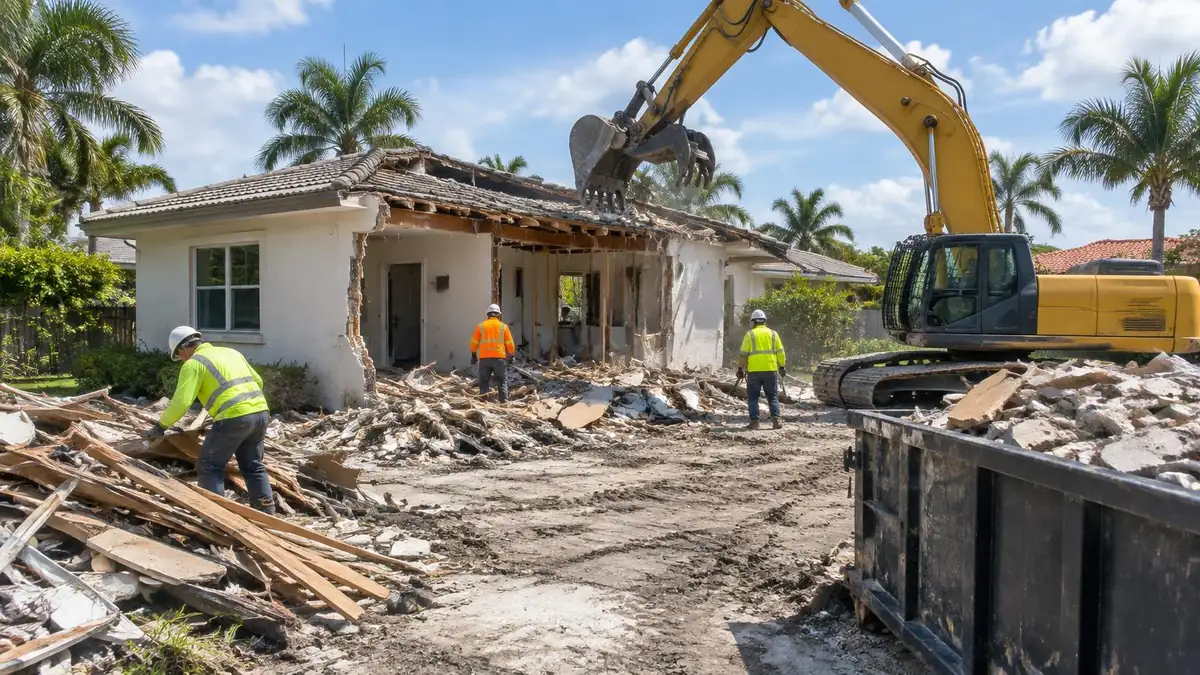
Residential demolition is taking down all or part of a house, garage, pool or other home structure, hauling the debris away and leaving the lot ready for what comes next. We do it across Miami-Dade, Broward and Palm Beach under Florida license CGC1541479.
State-certified Florida GC
CGC1541479, valid in every county
Demolition experience
Team experience since 2007
South Florida coverage
Miami-Dade, Broward & Palm Beach
A controlled start to finish
A house demolition usually includes the permit, utility disconnects with the sewer capped or the septic abandoned, an asbestos survey where it's needed, the teardown, hauling with disposal tickets, and grading. The demolition itself is usually the shortest part; the permit and the utility work take most of the calendar. Every site is different, so the plan is built around the actual access, utilities and neighbors.
Complete removal of houses and attached structures with debris hauling and a clearly defined final site condition.
Controlled removal of additions, garages, damaged areas or selected structural sections while protecting what remains.
Removal of finishes, cabinets, partitions and interior systems to prepare a home for renovation or rebuilding.
Careful demolition of unsafe residential areas after fire, flooding, wind or other property damage.
Organized loading, hauling and lawful disposal so the property is cleared for the next phase.
Foundation and slab removal, rough grading and practical material separation when the scope calls for it.
Our process
We inspect the structure, access, adjacent improvements and the result you need after demolition.
The proposal defines removals, protections, hauling, utilities, permits and site completion.
Required disconnects and site controls are confirmed before equipment and crews begin work.
The structure is removed in a controlled sequence, debris is hauled and the agreed site condition is completed.
Project planning
Dust, noise, access and work sequencing matter when homes and residents are close to the project.
Trees, driveways, walls, pools and adjoining structures to remain should be identified before demolition starts.
The demolition plan should support the new construction, landscape or sale condition planned for the lot.
South Florida specifics
In a flood hazard area, renovating an older home for 50 percent or more of its market value generally triggers today's floodplain standards, which often means raising the house. For many older homes in Miami-Dade, Broward and Palm Beach, that makes demolition and a new build the more practical path. Our renovate-or-tear-down guide walks through the math.
Most of a home demolition schedule is paperwork and preparation. We handle these items, or tell you exactly which ones you need to sign:
Older South Florida neighborhoods have narrow lots, zero-lot-line homes, duplexes and pools a few feet from the property line. We protect neighboring fences, walls, pools and landscaping, keep dust down with water, and switch to hand or small-machine demolition where a shared wall or tight setback calls for it.
From June through November we keep debris loaded out as the work progresses, so a half-demolished house is never left with loose material on site. When a storm watch is issued, the site is secured and equipment is staged safely until it passes.
Unless you ask us to leave them, the slab, footings, driveway and walkways are removed, the lot is rough graded, and you receive disposal tickets and a closed permit. The property is ready for a builder, a survey or a sale.
Answers before work begins
Yes. We pull the demolition permit under our Florida Certified General Contractor license, CGC1541479, and handle the utility disconnect letters, inspections and final closeout. Requirements vary by city, and some, like the City of Miami, only accept a demolition permit from a licensed contractor.
It depends on the size and construction of the house, asbestos, access for equipment, whether the slab, driveway and pool come out, hauling and the permit. We give a written, itemized quote after a site visit, and our house demolition cost guide explains what drives the price.
The demolition itself is usually a few days for a single-family home. The full schedule depends mostly on the permit, utility disconnects and any asbestos steps, which often take several weeks.
Single-family homes are generally exempt from the federal asbestos demolition rule, but counties can still require asbestos paperwork with the permit, and older homes are commonly surveyed. We tell you what your city and county require.
Yes. Selective demolition can remove an addition, garage, interior area or other defined portion while protecting the structure and finishes that remain.
Unless you ask us to leave them, the slab, footings, driveway and walkways come out and the lot is rough graded. Debris is hauled to permitted facilities, concrete and metal are recycled where possible, and you receive disposal tickets.
Where we work
Explore our services
Plan with confidence
Start with a clear scope
We’ll review the property, access, schedule and desired final condition before pricing the work.